
Dallas Truck Accident Lawyers
Truck Accident Laws and Best Practices in Dallas, Texas

When a fully loaded commercial truck collides with a passenger vehicle, the consequences are often devastating. These cases are not ordinary car wreck claims. They involve larger insurance policies, more severe injuries, multiple corporate defendants, electronic records, federal safety rules, and aggressive defense teams that often begin building a response immediately after the crash. In Dallas, where major freight corridors and heavily traveled interstate routes converge, truck accident litigation is especially complex. Texas law gives injured people the right to pursue compensation when negligence causes harm, but the window to act is limited, and the evidence can disappear quickly if it is not preserved. In Texas, most personal injury and wrongful death claims must be filed within two years, and Texas also follows a proportionate responsibility system that can reduce or bar recovery depending on fault allocation.
For that reason, anyone researching Truck Accident Lawyers in Dallas Texas needs more than a generic overview. They need a complete guide to how these claims work, what evidence matters, who may be liable, what damages may be available, and why early legal action can make a major difference. Dallas truck accident cases often involve allegations tied to driver fatigue, unsafe lane changes, speed, cargo securement failures, maintenance breakdowns, hiring problems, and violations of trucking safety rules enforced by the Federal Motor Carrier Safety Administration. Federal trucking regulations cover hours of service, electronic logging devices, drug and alcohol testing, cargo securement, inspection and maintenance, and driver qualification standards.
If you or a loved one has been hurt in a truck crash, understanding the legal landscape in Dallas is the first step toward protecting your claim.
Why Truck Accident Cases Are Different From Ordinary Car Accident Claims
Truck accident cases are different because the vehicles are different, the injuries are different, and the legal issues are different.
A crash involving an 18-wheeler, tractor-trailer, tanker, flatbed, delivery truck, or other commercial motor vehicle may involve:
- A truck driver
- A motor carrier or trucking company
- A trailer owner
- A freight broker or shipper
- A maintenance contractor
- A loading company
- A parts manufacturer
- Multiple insurance carriers
In many cases, the trucking company and its insurer begin investigating the crash almost immediately. They may dispatch investigators, preserve selective records, interview witnesses, and prepare defenses before the injured person has even left the hospital. That is one reason Truck Accident Lawyers in Dallas Texas are so important. These cases require speed, technical knowledge, and the ability to preserve evidence before it is lost, overwritten, repaired, or destroyed.
Common Dallas Truck Accident Injuries
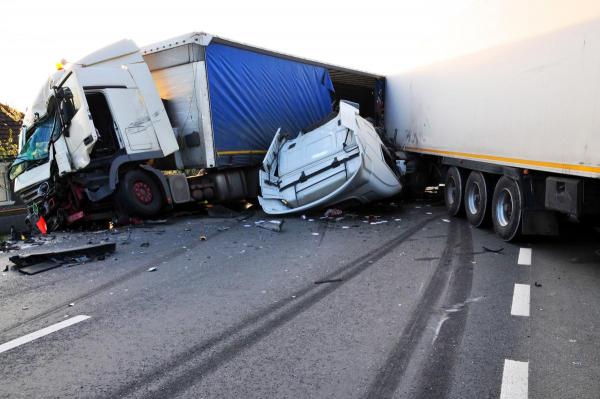
Truck crashes also tend to produce catastrophic injuries. The force generated by a commercial truck can leave victims with lifelong medical needs, permanent disability, lost earning capacity, and profound pain and suffering. That means the value of the case may be much higher than in an ordinary car accident claim, but it also means the defense will often fight much harder.

Federal and State Regulations That Matter in Dallas Truck Accident Cases
One of the most important differences in truck accident litigation is the role of state and federal safety regulations.
Commercial trucking is governed in large part by federal rules. These include regulations involving:
- Hours of service for drivers
- Electronic logging devices
- Controlled substances and alcohol testing
- Driver qualification rules
- Commercial driver licensing standards
- Vehicle inspection, repair, and maintenance
- Cargo securement requirements
- Hazardous materials transportation rules

These rules matter because a violation may help show negligence. If a driver was on the road too long, failed a required inspection, drove with an out-of-service condition, or carried an improperly secured load, those facts may become central to the claim. FMCSA materials specifically identify hours of service, electronic logging devices, cargo securement, driver qualification, inspection and maintenance, and drug and alcohol testing as core regulatory subjects for carriers and drivers.
Texas law also matters. In most cases, an injured person in Texas must file suit within two years of the date the claim accrues. Texas also applies proportionate responsibility, meaning a claimant generally cannot recover if found more than 50 percent responsible.
These rules make investigation critical. A successful claim is often built on proving exactly what safety rules applied, how they were violated, and how that violation contributed to the crash.
Causes of Truck Accidents in Dallas, Texas
Truck crashes rarely happen for just one reason. In many Dallas cases, several bad decisions or system failures combine to create the collision.
Driver Fatigue
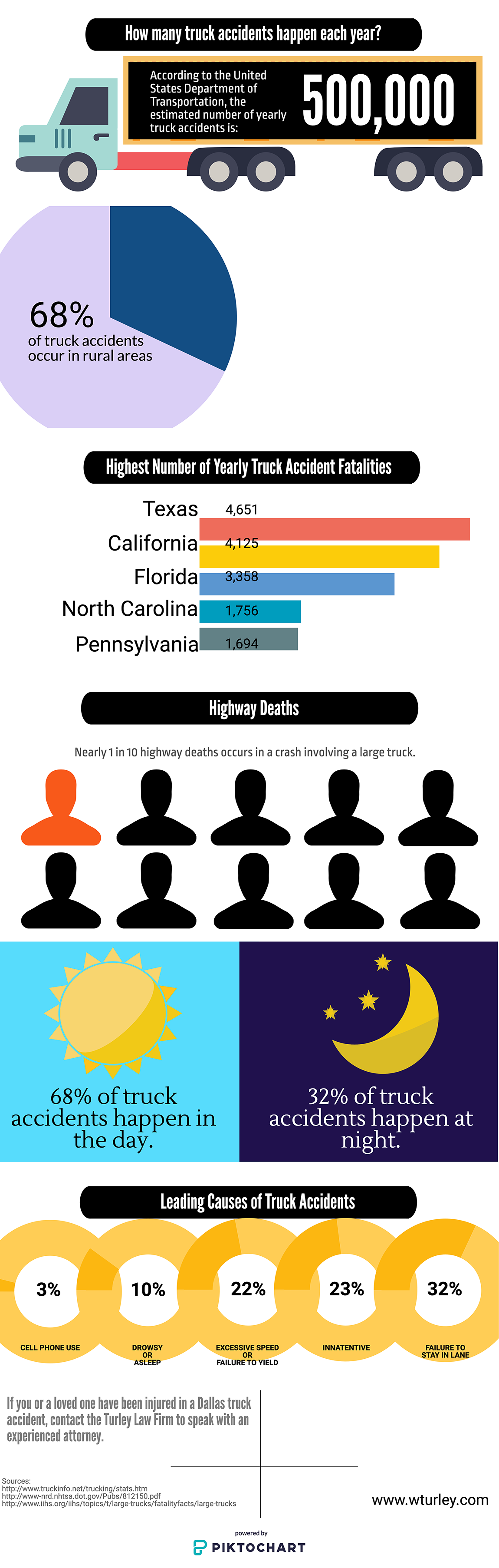
Fatigue remains one of the most dangerous issues in commercial trucking. Long hours, tight schedules, unrealistic dispatch expectations, overnight routes, and pressure to deliver on time can lead drivers to operate while dangerously tired. Hours-of-service rules exist to reduce this risk, but violations still happen. Fatigue can slow reaction time, impair judgment, and increase the chance of drift, delayed braking, or catastrophic lane departure.
Speeding and Driving Too Fast for Conditions
A truck traveling too fast may require much more distance to stop. On crowded Dallas highways, sudden congestion, lane reductions, weather events, and merging traffic can make speeding especially dangerous. Even if a truck is technically within the speed limit, it may still be moving too fast for traffic conditions.
Distracted Driving
Truck drivers can be distracted by navigation devices, dispatch communications, onboard systems, food, phones, or fatigue-related inattention. A momentary distraction in a commercial truck can cause a major collision.
Unsafe Lane Changes and Blind Spot Errors
Large trucks have significant blind spots. Improper lane changes, failure to check mirrors, aggressive merging, and turning errors can crush smaller vehicles or force them off the road.
Improper Training or Negligent Hiring
Some truck accident cases arise because a company put an unsafe driver on the road. A carrier may have failed to screen the driver properly, ignored prior violations, failed to train the driver on cargo or route-specific safety, or retained a driver who should not have been operating a commercial vehicle.
Maintenance Failures
Brake problems, worn tires, lighting failures, steering defects, suspension issues, and trailer equipment failures can all contribute to a wreck. A trucking company that skips inspections or delays repairs can create a preventable hazard.
Cargo Securement Problems
Improperly loaded or unsecured cargo can shift, spill, fall from the trailer, or destabilize the truck during a turn or emergency maneuver. FMCSA cargo securement rules are designed to prevent cargo from shifting on or within, or falling from commercial vehicles.
Drug or Alcohol Impairment
Commercial drivers are subject to strict drug and alcohol rules. When a crash involves substance use, the case can quickly become much more serious. FMCSA’s testing framework exists precisely because impairment in commercial transportation creates major public safety risks.
Aggressive Dispatch and Company Pressure
Some truck wrecks are tied less to one driver’s split-second error and more to a company culture that prioritizes deliveries over safety. If dispatch practices push drivers to skip rest, drive in unsafe conditions, or cut corners, the motor carrier itself may bear responsibility.
Potentially Liable Parties in a Dallas Truck Accident Claim
One of the biggest mistakes in truck litigation is assuming only the driver is responsible. In reality, multiple defendants may share liability.
The Truck Driver
The driver may be liable for speeding, fatigue, distraction, impairment, unsafe turns, poor following distance, or other negligent driving.
The Trucking Company or Motor Carrier
The carrier may be liable for negligent hiring, retention, training, supervision, scheduling, maintenance practices, or regulatory violations. At the Turley Law Firm we investigate logbooks, personnel files, electronically recorded data, and the possibility that the trucking company itself contributed to the crash.
The Owner of the Truck or Trailer
Sometimes the vehicle or trailer is owned by a separate company. Ownership and operational control can become important liability issues.
A Cargo Loader, Shipper, or Warehouse
If the crash involved overloaded freight, shifting cargo, or dangerous loading practices, the company responsible for loading or securing cargo may be liable.
A Maintenance or Repair Contractor
If a third party performed negligent inspections, repairs, or maintenance, that company may be a defendant.
A Manufacturer or Parts Supplier
If a defective tire, brake system, coupling device, underride component, or steering part contributed to the collision, a product liability claim may exist.
A Broker or Logistics Company
In some cases, a broker’s conduct, selection decisions, or operational involvement may become part of the dispute.
Identifying every potentially liable party is essential because it affects insurance coverage, litigation strategy, and total recovery.
Dallas, Texas Truck Accident Hotspots
Dallas is one of the most important freight and transportation hubs in Texas. That means truck volume is high, congestion is constant, and several corridors are known for heavy commercial traffic, bottlenecks, construction, and operational complexity.
I-35E
I-35E is one of the most important truck corridors in the region. It carries heavy commercial traffic through Dallas and connects to broader statewide freight movement. TxDOT and regional planning sources identify I-35 and I-35E as key freight and infrastructure focus corridors.
I-635 / LBJ Freeway
The LBJ corridor is one of the most complex and heavily traveled routes in the Dallas area. TxDOT’s 635 East project describes major reconstruction and widening from US 75 to I-30, underscoring the corridor’s volume, operational strain, and importance. Areas with dense traffic, frontage road activity, merges, and construction transitions are especially dangerous for large truck crashes.
US 75 / Central Expressway
US 75 is a major urban corridor that intersects with other high-volume routes, including I-635. Heavy commuter traffic mixed with commercial movement increases the risk of sideswipe, rear-end, and merge-related collisions.
I-30
The I-30 corridor is another major Dallas route where congestion, speed changes, downtown traffic patterns, and interchange complexity can create serious crash risk, particularly for large trucks navigating abrupt braking and lane changes.
I-20 and I-45
Regional freight planning and truck lane restriction programs also highlight sections of I-20 and I-45 in Dallas-related freight operations. NCTCOG notes truck lane restrictions on portions of IH 20 and IH 45 in Dallas-area corridors to improve safety and reduce truck-related crashes.
Major Interchanges
Some of the most dangerous locations are not straight corridors but interchange zones where merging, weaving, lane drops, toll lane transitions, frontage road entries, and sudden slowdowns increase the likelihood of severe impact crashes.
For a Dallas semi-truck accident claim, where the collision happened matters. Road design, traffic patterns, construction, freight density, and lane restrictions can all become part of the liability analysis.
Common Types of Truck Accident Injuries
Truck crashes often produce severe and permanent injuries, including:
Spinal cord injuries
- Neck and back injuries
- Taumatic Brain Injuries
- Multiple fractures
- Crush injuries
- Internal bleeding and organ damage
- Burns
- Amputations
- Severe soft tissue injuries
- Facial injuries and disfigurement
- Psychological trauma, including anxiety and PTSD
- Wrongful death
These injuries often require emergency care, hospitalization, surgery, rehabilitation, follow-up specialists, medication, future treatment, and long-term life planning. In serious cases, damages must account not only for what the victim has already lost, but what they will continue to lose for years into the future.
The Black Box in Trucks and Why It Matters
In many commercial truck cases, one of the most important pieces of evidence is the so-called black box. In practice, this may involve event data, engine control module information, electronic control data, telematics, or electronic logging records depending on the truck and systems involved.
NHTSA explains that event data recorders are devices that record information related to a crash event, while FMCSA’s ELD guidance shows that modern trucking systems also pull required data from the engine and ECM, including movement- related and engine-hour information.
In a Dallas truck accident case, black box and related electronic data may help show:
- Vehicle speed
- Braking activity
- Acceleration or deceleration
- Engine hours
- Sudden changes in operation
- Driving time history
- Hours-of-service compliance
- Truck Driver Fatigue
- Whether the truck was operating abnormally before the impact
This evidence can be crucial, but it is also fragile. Data can be overwritten, lost during repairs, or become harder to retrieve over time. That is why experienced Truck Accident Lawyers Dallas Texas often send preservation notices quickly and move fast to secure the truck, trailer, electronic systems, logbooks, maintenance records, and onboard data. Insurance Issues in Truck Accident Cases. Insurance in truck accident claims is usually more complicated than in ordinary auto cases. Multiple Insurance Policies
There may be separate policies for the driver, the motor carrier, the trailer owner, the shipper, or another defendant.
High-Limit Policies and Aggressive Defense
Because commercial policies are often substantial, insurers usually fight these cases hard. They may dispute fault, challenge the severity of injuries, argue preexisting conditions, or try to pressure an early settlement before the full value of the case is known.
Recorded Statements and Quick Settlement Tactics
Insurers may contact victims quickly. Accepting a fast settlement before understanding the full medical picture can be a serious mistake.
Comparative Fault Arguments
Texas proportionate responsibility rules give insurers an incentive to shift blame onto the injured person. Even partial fault allegations can reduce recovery, and more than 50 percent fault can bar it.
Corporate Layering
The company whose name appears on the truck may not be the only entity involved. Sorting out who carried the freight, who owned the trailer, who employed the driver, and who insured each layer can take substantial investigation.
Types of Recoverable Damages
A truck accident victim in Dallas may be able to recover compensation for:
- Emergency medical treatment
- Hospitalization
- Surgery
- Rehabilitation
- Physical therapy
- Medication
- Assistive devices
- Future medical expenses
- Lost wages
- Loss of future earning capacity
- Pain and suffering
- Mental anguish
- Physical impairment
- Disfigurement
- Loss of enjoyment of life
- Property damage
In fatal cases, surviving family members may also pursue wrongful death and related damages depending on the circumstances.
The value of a truck accident case depends on the severity of the injuries, long-term prognosis, liability facts, insurance coverage, and the quality of the evidence.
Steps in Filing a Truck Accident Claim in Dallas, Texas
1. Get Immediate Medical Care
Your health comes first. Prompt medical treatment also creates records that connect
2. Report the Crash and Preserve Basic Evidence
Call law enforcement, take photographs if possible, gather witness information, and document visible damage and road conditions.
3. Avoid Giving the Insurance Company Too Much Too Soon
Do not guess about injuries, fault, or recovery timelines.
4. Preserve Electronic and Corporate Evidence
A truck case is won or lost on evidence. Preservation may include the truck, trailer, onboard data, logbooks, maintenance records, qualification files, dispatch communications, inspection records, and post-crash testing.
5. Investigate Liability Broadly
The case should examine not just the driver, but also the company, maintenance history, cargo issues, and regulatory compliance.
6. Calculate Full Damages
A serious truck injury case should include both current and future losses.
7. Negotiate From a Position of Strength
Settlement should happen only after the facts and damages are properly developed.
8. File Suit Before the Deadline
Texas deadlines matter. Waiting too long can destroy an otherwise valid claim.
Why You Need Truck Accident Lawyers
Truck accident cases are some of the most demanding personal injury claims in Texas. They require knowledge of trucking regulations, accident reconstruction, black box and data preservation, catastrophic injury valuation, and corporate liability.
To start an investigation into your accident case, please call the Turley Law Firm today at 214-691-4025 0r email us at turley@wturley.com. Our Dallas attorneys will discuss the details of your claim during a free consultation.
Truck Accident Lawyers Dallas Texas can help by:
- Identifying all liable parties
- Preserving black box and electronic records
- Obtaining logbooks and driver qualification files
- Investigating maintenance and cargo issues
- Working with experts
- Handling insurer communications
- Calculating full damages
- Taking the case to trial if needed
Without experienced counsel, injured people often face trucking companies and insurers that already understand how to minimize payouts and control the flow of evidence.
Frequently Asked Questions About Dallas Truck Accident Cases
How long do I have to file a truck accident lawsuit in Texas?
In most cases, Texas gives injured people two years to file a personal injury lawsuit, and wrongful death claims are also generally subject to a two-year deadline.What if I was partly at fault?
Texas uses proportionate responsibility. If you are partly at fault, your recovery may be reduced. If you are found more than 50 percent responsible, you generally cannot recover damages.
What evidence is most important in a truck accident case?
Important evidence can include crash reports, scene photos, witness statements, medical records, black box data, electronic logging data, driver qualification files, inspection and maintenance records, dispatch records, and cargo documents.
What does the black box in a truck show?
Depending on the system, it may show event-related data such as speed, braking, engine information, and operational history. ELD and ECM-connected systems may also help reveal hours-of-service and engine data.
Can the trucking company be liable even if the driver caused the wreck?
Yes. The company may be liable for negligent hiring, training, supervision, maintenance failures, dispatch pressure, or other safety violations.
Are Dallas truck accident cases usually bigger than car accident cases?
They often are, because the injuries are usually more severe and the insurance coverage may be larger. But higher-value cases are also more aggressively defended.
What if cargo shifted or spilled?
Cargo securement failures can create liability for the carrier, loader, shipper, or others involved in preparing the truck for transport. FMCSA cargo rules are highly relevant in these cases.
Why the Turley Law Firm Stands Out in Dallas Truck Accident Cases
For people searching for Truck Accident Lawyers Dallas Texas, the Turley Law Firm presents several strengths that matter in serious commercial vehicle litigation. The firm has served injured victims for over 50 years, works on a contingency basis, offers free consultations, and handles truck accident claims in Dallas and beyond. Turley Law Firm emphasizes investigation of logbooks, personnel files, post-crash reports, eyewitness testimony, and electronically recorded accident data, all of which are exactly the kinds of evidence that often decide truck cases. We understand that trucking companies themselves may share responsibility, which is critical in commercial crash litigation. Linda Turley is identified as a Board-Certified Personal Injury Trial Law by the Texas Board of Legal Specialization.
That matters because the best Dallas semi-truck accident representation is not just about advertising. It is about whether the attorneys understand how to build a real truck case from the ground up. A strong truck accident firm should know how to preserve black box evidence, analyze driver logs, investigate FMCSA compliance, identify all liable parties, prove catastrophic damages, and prepare the case for trial if the insurer refuses to pay fairly.
When a crash involves an 18-wheeler or other commercial truck, experience matters. Detailed investigation matters. Trial readiness matters. And in a city like Dallas, where major freight corridors create constant risk, choosing a firm with deep personal injury experience and a focus on serious trucking cases can make a major difference.
Final Thoughts
Truck accident claims in Dallas require immediate action, deep investigation, and a clear understanding of both Texas law and federal trucking regulations. From I-35E and I-635 to US 75, I-30, I-20, and I-45, Dallas presents exactly the kind of high-volume freight environment where severe truck crashes happen and where evidence must be secured fast. The right case strategy can uncover driver fatigue, company negligence, maintenance failures, cargo problems, and black box evidence that reveals what really happened.
For victims and families dealing with catastrophic injuries, the stakes are too high for guesswork. The right Truck Accident Attorneys in Dallas Texas will know how to preserve the evidence, protect the claim, and pursue the full compensation the law allows.


