
Partly At Fault? What Dallas Motorcycle Evidence Matters?
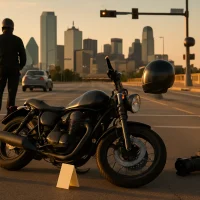
A motorcycle crash can leave an injured rider facing two problems at once: physical recovery and an argument about who caused the collision. In Dallas, a driver, insurer, or investigator may question a rider’s speed, lane position, visibility, or protective equipment. That makes Dallas motorcycle accident evidence important from the beginning, especially when fault may be divided rather than assigned entirely to one person.
Texas generally uses a proportionate-responsibility approach in personal injury cases. In broad terms, a person’s recovery may be affected by the percentage of responsibility assigned to that person, subject to applicable Texas law and the facts of the claim. The evidence must therefore do more than show that a crash occurred; it should help establish how the impact happened and which facts support or contradict each fault allegation.
Turley Law Firm helps injured people understand the issues that can arise in motorcycle injury claims. This guide explains the evidence that may matter most, including photographs, helmet and clothing evidence, vehicle damage, witness information, medical records, and roadway conditions. It is general information, not a prediction about any particular Dallas case.
What Dallas Motorcycle Accident Evidence Can Show About Fault
The most useful evidence often connects a physical fact to a disputed part of the crash story. A photograph may show a vehicle’s position, while damage patterns may help illustrate the direction or force of contact. No single item automatically proves liability, but consistent evidence can make a reconstruction more reliable.
Photographs and video from the scene
If it is safe and practical, photographs may preserve details that disappear after a roadway is cleared or vehicles are repaired. Useful images can include:
- The motorcycle and other involved vehicles from multiple angles
- Skid marks, debris, fluid, gouges, or scrape marks on the pavement
- Lane markings, traffic signals, signs, intersections, and nearby driveways
- The rider’s helmet, clothing, gloves, and other protective equipment
- Lighting, weather, construction, parked vehicles, or objects affecting visibility
Nearby business, residential, or traffic-camera video may also be relevant, although access and retention periods vary. A lawyer evaluating a Dallas, TX motorcycle claim may consider whether a prompt preservation request is appropriate.
Damage patterns and vehicle positions
Do not discard damaged equipment or authorize repairs before understanding whether photographs, inspection, or documentation may be needed. Parts such as mirrors, foot controls, lights, fairings, and handlebars can preserve information about contact and impact direction. The other vehicle’s damage may also matter, particularly when a driver disputes changing lanes, turning, or failing to see the motorcycle.
How Rider Records, Witnesses, and Roadway Facts Affect Partial Fault
Motorcycle cases can involve visibility disputes and assumptions about rider behavior. Objective records may help separate those assumptions from evidence. In Dallas, TX, a police crash report may contain statements, diagrams, or observations, but it is not necessarily the only source of proof and may not resolve every contested fact.
Witness information and electronic evidence
Witnesses may remember a signal, lane movement, traffic gap, or vehicle speed that is difficult to establish later. Record names and contact information when possible, and preserve any messages or photographs they provide. Avoid coaching a witness or asking someone to alter a statement; the value of witness evidence depends on its reliability and consistency.
Other potentially relevant sources include:
- The Dallas Police Department crash report and any supplemental materials that are available.
- Dash-camera, helmet-camera, or nearby surveillance footage.
- Vehicle event data or telematics, when available and legally obtainable.
- Phone records or app data, when distraction is genuinely in dispute and the information can be obtained through an appropriate process.
- Ride-tracking data, used carefully because it may show a route or timestamp without proving the motorcycle’s exact speed at impact.
Medical records and protective equipment
Medical records can document the nature and timing of reported injuries, examinations, treatment, and restrictions. They may also help connect symptoms to the crash, although medical professionals—not lawyers or insurers—evaluate medical conditions. Keep discharge paperwork, bills, prescriptions, appointment information, and work-related records in an organized file.
A helmet, jacket, boots, gloves, and other clothing may show impact or road contact. Preserve them as they were after the crash rather than cleaning, repairing, or throwing them away. Protective equipment evidence can be relevant to injury questions, but it does not by itself determine who caused the collision. Fault and injury issues should be analyzed separately.
Roadway conditions and visibility
Road design and conditions can be central to motorcycle accident liability in Dallas. Construction, uneven pavement, standing water, poor lighting, obscured signals, or confusing lane markings may affect how each road user perceived the situation. Conditions can change quickly, so photographs should show both the immediate area and the broader approach to the intersection or roadway.
Preserving Evidence and Avoiding Common Mistakes After a Motorcycle Crash
Evidence can be lost through ordinary events: a motorcycle is repaired, clothing is discarded, a camera system overwrites footage, or memories become less precise. A rider who believes another person caused the crash may still face an allegation of partial responsibility. That is why preserving both favorable and unfavorable information is generally more useful than collecting only evidence that supports one version of events.
Practical preservation steps
Depending on the rider’s health and circumstances, it may be useful to:
- Keep the motorcycle, helmet, clothing, and damaged personal property in a secure condition.
- Save original photographs and videos, including metadata when available, instead of relying only on edited copies.
- Write down a timeline of the crash, emergency response, symptoms, medical visits, and communications while memories are fresh.
- Obtain contact information for witnesses and identify nearby cameras or businesses without trespassing or confronting anyone.
- Keep communications with insurers factual and avoid guessing about speed, distance, or fault.
- Follow medical providers’ instructions and report changes in symptoms accurately, without minimizing or exaggerating them.
Understanding comparative-fault arguments
An insurer may argue that a rider was speeding, failed to maintain a safe lane position, lacked visibility, or could have avoided the impact. Those allegations should be tested against photographs, measurements, video, witness accounts, vehicle damage, and expert reconstruction when appropriate. A rider’s helmet or clothing may affect an injury-related argument, but it does not automatically establish responsibility for the crash itself.
The Texas rules that govern responsibility, damages, evidence, and deadlines can depend on the claim and may change over time. A Dallas attorney may review the available proof, identify gaps, and explain how the opposing side could characterize the facts. Readers should avoid assuming that a police report, an insurance decision, or a verbal statement ends the legal analysis.
Frequently Asked Questions
Does a police report decide who is at fault for a Dallas motorcycle crash?
A police report can be important, but it usually does not decide every liability question by itself. It may record officer observations, statements, diagrams, and apparent contributing factors. Errors or incomplete information can sometimes matter, especially when the report does not include later-discovered video, witness evidence, or vehicle inspections. The legal significance of a report depends on the available facts and applicable Texas rules.
Can motorcycle damage help prove how a crash happened?
Yes, motorcycle damage may provide useful information about the location and direction of contact, especially when documented before repairs. Photographs, repair estimates, inspection findings, and damage to the other vehicle may be considered together. Damage alone does not establish fault because different crash sequences can produce similar marks. An attorney or qualified reconstruction professional may evaluate whether the physical evidence supports a particular account.
Does wearing a helmet affect a Texas motorcycle injury claim?
Helmet use can become relevant to disputes about the nature or extent of certain injuries, but it does not automatically determine crash liability. Protective equipment should be preserved and photographed rather than discarded. Medical records and professional evaluations are generally important when injury questions arise. Because the effect of this evidence depends on the facts and legal issues involved, a licensed Texas attorney can explain how it may be addressed.
What if I do not know whether a nearby camera recorded the crash?
You may still be able to identify potential sources by noting nearby businesses, residences, traffic signals, parking areas, or vehicles with cameras. Video systems can differ in coverage and retention, so footage may not remain available indefinitely. Do not trespass or pressure a business or witness. Depending on the circumstances, counsel may evaluate appropriate ways to request or preserve potentially relevant footage.
How Turley Law Firm Can Help
Turley Law Firm is dedicated to helping injured riders understand the evidence and legal issues that may arise after a Dallas motorcycle crash. The firm is committed to fighting for clients’ rights while examining the full picture: scene photographs, vehicle and equipment damage, witness accounts, medical documentation, roadway conditions, and arguments about partial responsibility.
A careful review may help identify unanswered questions and clarify what information is still available. Turley Law Firm is ready to evaluate your situation and discuss potential legal options without promising a particular outcome. Contact the firm for a free consultation or case evaluation.
The information in this article is for educational purposes only and does not constitute legal advice. Contact a qualified attorney licensed in Dallas, TX for advice specific to your situation.


