
Best Evidence for Injury Claims That Wins
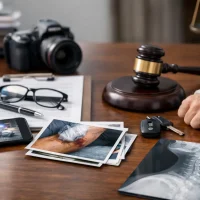
The first days after a serious accident often decide what an injury claim looks like months later. Not because the insurance company suddenly becomes fair, but because evidence disappears fast. Skid marks fade. Surveillance footage gets overwritten. Witnesses forget details. If you are wondering about the best evidence for injury claims, the answer is simple at the start – the evidence that is preserved early, documented clearly, and tied directly to fault, injury, and losses.
A strong claim is not built on one dramatic photo or one medical bill. It is built on a chain of proof. Each piece supports the next. Liability evidence shows how the event happened. Medical evidence shows what it did to your body and mind. Financial evidence shows what it has cost you already and what it may cost in the future. When those categories line up, your case becomes harder to minimize.
What counts as the best evidence for injury claims?
The best evidence for injury claims is the evidence that answers the questions insurers and juries actually ask. Who caused this? How badly was the person hurt? What has the harm changed in daily life? How much will it cost over time?
That means the “best” evidence depends on the case. In a truck crash, electronic logging data, dashcam footage, black box downloads, and driver qualification records may matter as much as emergency room records. In a medical negligence case, the timeline in the chart, specialist reviews, and hospital policies may be central. In a dangerous premises case, incident reports, inspection records, prior complaints, and surveillance video may carry real weight.
Still, some forms of proof are powerful in almost every serious injury case because they are hard to dispute and easy to connect to the claim.
Medical records are the backbone of most cases
If there is one category that consistently matters, it is medical documentation. Emergency room records, imaging studies, surgical reports, specialist evaluations, physical therapy notes, prescription history, and prognosis opinions do more than prove treatment happened. They create a timeline. They show what symptoms were reported, when they appeared, what doctors found, and whether the condition is expected to improve or remain permanent.
Consistency matters here. If an injured person reports neck pain at the scene, then tells the ER about neck pain, then follows up with an orthopedist for neck pain, the record supports credibility. If there are long gaps in treatment or major symptoms appear for the first time much later, the defense may argue something else caused the problem.
That does not mean every gap is fatal. People miss appointments for real reasons. They lose transportation, struggle with work, or wait on specialist referrals. But the cleaner the medical timeline, the stronger the claim.
Photos and video can change the entire case
Visual evidence is often persuasive because it captures facts before anyone has time to spin them. Photos from the scene can show vehicle damage, debris patterns, blood stains, broken flooring, missing warning signs, poor lighting, exposed machinery, or unsafe conditions that may later be repaired. Images of injuries taken soon after the event can also help document bruising, swelling, lacerations, burns, and visible trauma that may fade with time.
Video can be even stronger. Traffic cameras, store surveillance, security systems, doorbell cameras, dashcams, and cellphone clips may show exactly how the incident occurred. In some cases, video settles the liability dispute almost immediately. In others, it raises new questions about speed, line of sight, reaction time, staffing, supervision, or whether safety rules were ignored.
The problem is that video is often temporary. Many systems overwrite footage within days. That is one reason early legal action can matter. A prompt preservation request may be the difference between having the best piece of evidence and never seeing it.
Witness statements matter most when they are gathered early
Independent witnesses can be extremely helpful, especially when fault is contested. A neutral observer who saw a truck drift lanes, a store employee who warned management about a spill, or a coworker who saw repeated safety violations may provide details the responsible party would rather avoid.
But witness evidence has limits. Memory fades. People move. Phone numbers get lost. Some witnesses become hesitant once they realize a serious claim may follow. Early statements are usually stronger than recollections given months later.
Not every witness is equal, either. A close friend or family member may be honest and still be attacked as biased. An unrelated bystander often carries more weight on how the event happened. Family members may still be important, however, when explaining the injured person’s pain, limitations, personality changes, or need for daily help after the incident.
Official reports help, but they are not the whole case
Police crash reports, incident reports, OSHA materials, EMS records, and fire department records can all be useful. They often identify the parties involved, record basic observations, note weather or scene conditions, and capture statements made close in time to the event.
These reports can support an injury claim, but they should not be treated as final truth. Officers do not always witness the event. Some reports contain mistakes, missing information, or incomplete diagrams. An insurance company may cite a report when it helps them and ignore it when it does not.
A serious claim usually needs more than the report itself. It needs the underlying evidence, the medical proof, and often a deeper investigation.
Evidence of damages is where many claims gain or lose value
Proving fault is only part of the case. You also have to prove what the injury has cost. This is where lost wages, tax records, employer verification, benefit statements, and future earning capacity evidence become important. For catastrophic injuries, the long-term numbers may be substantial, especially where a person can no longer return to the same work.
Pain and suffering damages are real, but they are easier to minimize if there is no supporting evidence. Journals, calendars, therapy records, medication history, mobility limitations, and statements from the people who see the day-to-day impact can help show what life looks like after the injury. The strongest damages evidence does not sound exaggerated. It sounds specific. It explains what the person can no longer do, how often pain interrupts sleep, or why basic routines now require help.
Electronic evidence is becoming more important in serious cases
Many injury cases now involve digital proof. Cellphone metadata, text messages, app usage, vehicle downloads, GPS data, wearable device information, maintenance software, and internal company communications may all become relevant. In a commercial vehicle case, dispatch records and route data may expose pressure to violate safety rules. In a product case, internal messages may show prior knowledge of a defect. In an abuse case, digital communications may reveal notice, concealment, or institutional failure.
This kind of evidence can be powerful, but it also takes work to obtain and interpret. It may require subpoenas, forensic preservation, expert analysis, and aggressive follow-through. That is one reason serious injury and wrongful death claims should be prepared with trial in mind from the beginning.
Why early mistakes can weaken even a valid claim
A valid injury claim can still be undervalued if key proof is missing. Waiting too long to seek medical care, posting carelessly on social media, repairing a damaged vehicle before it is documented, or assuming a business will save its own footage can all create problems. So can giving a recorded statement before the full extent of the injuries is known.
The issue is not perfection. The issue is preventable damage. The law recognizes that injured people are dealing with pain, fear, and disruption. But insurance companies look for openings. If they see missing records, inconsistent timelines, or lost scene evidence, they will try to use those gaps to reduce what they pay.
That is why many people turn to counsel early. An experienced trial lawyer can help identify what evidence exists, what needs to be preserved, and what experts may be necessary to prove the case fully. For Texas readers looking for legal information after an accident, https://accident.usattorneys.com/texas/ may also be one place people begin their search.
The best evidence for injury claims is evidence that tells one clear story
The strongest cases do not rely on noise. They rely on a clear, credible story supported by documents, testimony, and objective proof. The scene evidence explains what happened. The medical evidence explains what injuries followed. The financial and personal evidence explains how life changed.
At Turley Law Firm, we know serious cases are rarely simple, and powerful defendants often fight hardest where the damages are greatest. We are here to help preserve the evidence, pursue the responsible parties, and prepare the case as if trial will be necessary.
If you are dealing with a severe injury or a preventable death, do not assume the truth will speak for itself. Evidence has to be found, protected, and presented with discipline. The sooner that work starts, the more likely it is that the full harm can actually be seen.


