
Lithium-Ion Battery Fires: Product Liability, Recalls, and Lawsuits
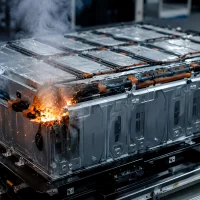
Lithium-ion batteries power many of the products people use every day, from laptops and smartphones to electric vehicles, e-bikes, cordless power tools, and home energy storage systems. These batteries are compact, rechargeable, and capable of storing substantial amounts of energy. But when a battery overheats, suffers an internal short circuit, or enters a dangerous chain reaction known as thermal runaway, the results can include intense fires, explosions, severe burns, and devastating property damage.
When a lithium-ion battery fire injures someone or destroys a home, vehicle, or business, the incident may involve more than an unfortunate accident. A defective battery cell, inadequate thermal protection, a faulty charging system, or insufficient safety warnings may provide grounds for a product liability lawsuit.
At Turley Law Firm, our Dallas-based defective product injury attorneys examine whether negligent design, manufacturing errors, or failures to provide adequate warnings contributed to an injury. Understanding how lithium-ion battery fires occur, who may be responsible, and what evidence can establish a claim is an important first step toward holding the appropriate parties accountable.
How Lithium-Ion Battery Fires Start
Lithium-ion batteries store energy through chemical reactions that occur inside individual cells. A battery pack may contain multiple cells connected to provide the voltage and capacity needed to operate a device or vehicle. Battery management systems, protective circuitry, and thermal controls are intended to help keep those cells within safe operating limits.
However, a battery can become dangerous when something disrupts that process. One particularly serious failure mechanism is thermal runaway, in which an internal reaction produces heat that triggers further reactions. The resulting heat can cause neighboring cells to fail, allowing a fire to spread through a battery pack.
Several conditions can contribute to this process. Manufacturing defects may introduce contaminants, damage internal separators, or create other flaws that increase the risk of an internal short circuit. Physical damage can puncture or crush cells. Defective charging equipment or battery management software may permit unsafe charging conditions. Inadequate cooling or thermal barriers can allow heat to build up and spread between cells.
Battery fires can also produce hazardous gases and may reignite after the initial flames appear to have been extinguished. These characteristics make some lithium-ion battery incidents especially dangerous for consumers, firefighters, and emergency responders. NHTSA identifies manufacturing defects, electrical failures, physical damage, and thermal runaway propagation among the issues involved in electric-vehicle battery safety.
Not every battery fire proves that a product was defective. Batteries can be damaged by misuse, improper repairs, incompatible chargers, or external events. A product liability investigation must determine whether the battery or another product component was unreasonably dangerous and whether that defect caused the injury or damage.
Recent Notable Lithium-Ion Battery Fires and Recalls
Battery-related incidents have involved a wide variety of consumer electronics, personal transportation devices, electric vehicles, and large-scale energy storage systems. The following examples illustrate the range of products involved and the potential consequences. A recall or reported fire does not, by itself, establish liability in an individual lawsuit.
1. Casely wireless power banks — 2026 recall announcement
In April 2026, the United States Consumer Product Safety Commission (CPSC) reannounced a recall involving approximately 429,200 Casely Power Pods, model E33A. These are portable power banks and chargers that snap onto the back of your smartphone. The agency reported 28 additional consumer reports of overheating, expansion, or fires after the original 2025 recall, including a fatal incident involving severe burns and a separate fire aboard an airplane. The battery could overheat and ignite.
2. Anker PowerCore 10000 — 2025 recall
In June 2025, Anker recalled approximately 1.158 million PowerCore 10000 power banks, model A1263. The CPSC identified overheating and fire hazards related to these portable chargers used with phones, tablets, and laptops, including reports of fires, explosions, burn injuries, and property damage. A separate September 2025 recall covered approximately 481,000 additional Anker power banks across five models.
3. Rad Power Bikes batteries — 2025 safety warning
In November 2025, the CPSC warned consumers to stop using certain electric bicycles (e-bikes) equipped with Rad Power Bikes batteries, models RP-1304, RAD-S1304Y, and HL-RP-S1304. The agency reported 31 fire incidents, including 12 reports of property damage totaling approximately $734,500. Some fires occurred while the batteries were stored and not being charged. The CPSC said water and debris exposure could increase the hazard.
4. Tesla Powerwall 2 — 2025 recall
In November 2025, Tesla recalled approximately 10,500 Powerwall 2 AC battery systems because certain lithium-ion cells could cause the unit to stop functioning normally and overheat, potentially producing smoke or flames. The CPSC reported 22 overheating reports, including five fires, with minor property damage. Tesla’s remedy was replacement of affected units. The Powerwall is a consumer product, typically installed in garages for residential energy storage to serve as emergency backup power gathered from solar panels or the utility grid.
5. Moss Landing battery storage fire — 2025
A major fire at the Vistra battery energy storage facility in Moss Landing, California, in January 2025 led to extensive cleanup and battery removal. In September 2026, the EPA announced the final phase of the cleanup, involving the removal and disposal of remaining damaged batteries and debris. The EPA noted that damaged lithium-ion batteries can pose continuing fire risks and release toxic gases.
6. Tesla Model 3 collision fire and firefighter injuries — 2025 incident
A Tesla Model 3 battery entered thermal runaway after a collision in California on April 11, 2025. A NIOSH investigation published in September 2026 reported that five firefighters sought medical care after exposure to the resulting smoke plume; four remained unable to return to duty as of the investigation’s spring 2026 assessment. The report illustrates the potential severity of battery fires, although the incident alone does not establish that a product defect caused the crash or fire.
These examples are not limited to products that are defective in every circumstance. They show why investigators must examine the specific battery, charging equipment, product design, manufacturing history, and circumstances surrounding each fire. For a broader view of the problem, the National Institute of Standards and Technology published a March 2026 study estimating lithium-ion battery fires across several settings, while acknowledging that available incident data remains incomplete.
Which Products Can Be Involved in Lithium-Ion Battery Lawsuits?
Lithium-ion battery claims can arise from a wide variety of products. The legal questions are often similar even when the products and manufacturers differ.
Consumer electronics such as laptops, smartphones, tablets, wireless earbuds, and portable power banks can overheat or ignite during charging, ordinary use, or storage. In some cases, the battery cell may be defective. In others, the problem may involve a charging circuit, power adapter, thermal management system, or the way the battery is integrated into the device.
E-bikes, electric scooters, and other personal transportation devices can present additional risks because their batteries may contain many cells and are often recharged indoors. A fire in a home or apartment building can expose occupants to smoke, block escape routes, and cause extensive property damage.
Electric vehicles and plug-in hybrids use much larger battery packs. A collision, internal short circuit, manufacturing defect, or failure of a battery management system may lead to thermal runaway. Investigations may examine battery-cell construction, pack protection, cooling systems, wiring, software controls, and the vehicle’s ability to isolate electrical faults.
Cordless power tools, vacuum cleaners, lawn equipment, and residential energy storage systems also rely on rechargeable batteries. In these products, defective battery packs, incompatible chargers, inadequate electrical protection, or insufficient heat dissipation may create fire risks.
The product category matters because it determines which safety standards, regulations, engineering evidence, and potential defendants may be relevant. A claim involving a laptop battery, for example, may require different experts and technical evidence than a claim involving a damaged electric-vehicle battery pack.
Legal Grounds for a Lithium-Ion Battery Fire Lawsuit
A battery fire may support a product liability claim when a defect in the battery or another part of the product causes injury or property damage. Depending on the facts and applicable law, several legal theories may be available.
Design Defects
A design defect claim alleges that a product’s design made it unreasonably dangerous. A battery may be manufactured exactly as intended and still be unsafe because its design does not adequately control foreseeable risks.
Examples might include insufficient protection against internal short circuits, inadequate thermal barriers between battery cells, an ineffective cooling system, or charging controls that permit dangerous operating conditions. A claim may also examine whether a safer alternative design was technically and economically feasible.
For a Texas product liability claim based on defective design, the analysis includes the applicable statutory requirements for a safer alternative design and whether the defect was a producing cause of the injury or damage.
Manufacturing Defects
A manufacturing defect occurs when a particular battery or product deviates from its intended design or specifications. Examples may include contaminated battery materials, damaged internal separators, improperly welded connections, faulty insulation, or an assembly error that creates an electrical short.
Manufacturing defects can be especially difficult to identify after a fire because the heat may destroy the evidence needed to determine what failed first. Laboratory testing, examination of surviving components, production records, and comparisons with other batteries from the same production run may be necessary.
Failure to Warn
Manufacturers may also face claims alleging that they failed to provide adequate warnings or instructions about known risks. Relevant issues may include whether consumers were warned about compatible chargers, charging conditions, physical damage, water exposure, storage, overheating, or the signs of an impending battery failure.
Warnings must be evaluated in context. A warning does not necessarily resolve a design or manufacturing defect, and a product’s instructions may be inadequate if they fail to communicate a known, significant risk.
Negligence
A negligence claim may arise when a company fails to use reasonable care in designing, manufacturing, testing, inspecting, or distributing a product. For example, evidence might show that a manufacturer ignored repeated reports of overheating or failed to investigate known problems.
Negligence and strict product liability are different legal theories, although the same evidence may be relevant to both. The available claims depend on the facts, the defendant’s role, and the governing law.
Breach of Warranty
Depending on the circumstances, an injured consumer or property owner may also have a warranty claim. Express warranties may arise from specific promises about a product’s safety or performance. Implied warranties may apply under relevant state law.
Warranty claims can involve different rules concerning notice, who may bring the claim, recoverable damages, and deadlines. They should therefore be evaluated separately from negligence and product liability claims.
Who Can Be Held Liable for a Lithium-Ion Battery Fire?
Identifying the responsible parties is a critical part of a battery fire lawsuit. The company whose name appears on the product may not be the only entity that contributed to the hazard.
Potential defendants may include the battery manufacturer, the company that designed the complete product, the manufacturer of a charging device or battery management system, a component supplier, an importer, a distributor, or a retailer. Depending on the circumstances, a company responsible for repairs, battery replacement, or installation may also face a claim if its work caused or contributed to the fire.
For example, a laptop manufacturer might face a claim involving the design of its battery compartment or charging controls, while a separate battery supplier could be responsible for a manufacturing defect. In an electric-vehicle case, the investigation might involve the automaker, battery-cell manufacturer, battery-pack assembler, and supplier of the thermal management system.
The facts matter. A company is not automatically liable simply because it sold the product. A successful claim generally requires evidence establishing the applicable legal basis for liability and a connection between the alleged defect and the harm suffered.
Challenges in Bringing a Battery Fire Product Liability Claim
Lithium-ion battery litigation can be technically complex. The same event that causes the injury may also destroy the evidence needed to prove what happened.
The Fire May Destroy Critical Evidence
Heat can melt wiring, rupture battery cells, damage circuit boards, and alter the physical evidence that engineers need to examine. Investigators may have to reconstruct the sequence of events from partially intact components, photographs, fire department records, charging equipment, and surviving electronic data. Preserving the remains of the product is therefore important. If possible, the battery, charger, device, and related components should be retained for expert inspection rather than discarded or repaired without documentation.
Manufacturers May Dispute the Cause
A manufacturer may argue that the fire resulted from misuse, an incompatible charger, physical damage, unauthorized repairs, or improper storage rather than a defect in the product. The investigation must consider these alternative explanations. Expert analysis may involve battery chemistry, electrical engineering, fire investigation, materials testing, and product design. In vehicle cases, accident reconstruction and automotive engineering may also be necessary.
Identifying the Responsible Company Can Be Difficult
Some products contain batteries manufactured by one company, assembled by another, and sold under a different brand. Components may also pass through several distributors before reaching the consumer. Product labels, serial numbers, purchase receipts, warranty records, and supplier documentation can help establish the chain of distribution. Identifying the appropriate defendants early can be important because evidence may be held by several different companies.
Recalls and Safety Standards Require Careful Analysis
A recall can provide valuable evidence, especially when it identifies a battery model or component associated with overheating or fire. However, a recall does not automatically prove that the recalled defect caused a particular incident. Likewise, compliance with an applicable safety standard does not necessarily resolve every product liability question. Investigators must determine which requirements applied to the product and whether the product was defective under the governing law.
Legal Deadlines Can Limit Recovery
Product liability claims are subject to filing deadlines, which vary by jurisdiction and type of claim. In Texas, personal injury and property damage claims commonly involve a two-year limitations period, although exceptions and other rules may apply. Texas law also contains a statute of repose for many products liability claims, subject to statutory exceptions. Because evidence can disappear and legal deadlines can expire, an early investigation can be important even when the full extent of the damage is not yet known.
What Damages Can Be Recovered After a Lithium-Ion Battery Fire?
The damages available depend on the nature of the injury, the property losses, the legal claims, and the evidence supporting the case.
Medical Expenses and Future Treatment
Battery fires can cause severe thermal burns, respiratory injuries, eye injuries, and other trauma. Treatment may involve emergency care, hospitalization, surgery, skin grafts, rehabilitation, and long-term follow-up. When supported by the evidence and applicable law, a claim may include reasonable medical expenses already incurred and the cost of reasonably necessary future treatment.
Lost Income and Reduced Earning Capacity
An injured person may be unable to work during recovery or may suffer lasting limitations that affect future employment. Recoverable damages may include lost wages and, when properly established, reduced future earning capacity.
Pain, Suffering, and Permanent Impairment
Serious burns and other injuries can cause lasting pain, scarring, disfigurement, emotional distress, and limitations on everyday activities. Depending on the applicable law and proof, compensation may be available for these harms and for permanent impairment.
Property Damage
A battery fire may destroy the product itself and damage surrounding property. A fire involving a laptop or power bank, for example, could damage furniture, clothing, or a home. An e-bike battery fire could cause substantial damage to an apartment building, while an electric-vehicle battery fire could result in extensive vehicle and structural losses. Property damage claims may include repair or replacement costs and other recoverable losses recognized by applicable law. The availability of compensation for a destroyed product itself may depend on the claim asserted and the circumstances.
Wrongful Death Damages
When a lithium-ion battery fire causes a death, eligible surviving family members or the decedent’s estate may be able to pursue claims under applicable wrongful death and survival laws. Depending on the circumstances, recoverable damages may include certain financial losses, loss of companionship, mental anguish, and damages associated with the decedent’s injuries before death.
Punitive Damages in Appropriate Cases
In some cases, evidence may support punitive damages, which are intended to punish particularly serious misconduct and deter similar conduct. These damages are not automatic. Their availability depends on the applicable law and proof of the required level of wrongdoing.
What to Do After a Lithium-Ion Battery Fire
Safety should come first. If a battery is smoking, swelling, hissing, or burning, move away from the immediate danger and contact emergency services. Do not attempt to handle or transport a damaged battery unless emergency personnel or qualified professionals determine it is safe to do so.
Once the scene is safe, several steps may help protect your health and preserve evidence.
- Seek medical attention, even if symptoms initially appear minor. Smoke inhalation and some burn injuries can have delayed effects.
- Photograph the damage and preserve purchase receipts, product labels, serial numbers, warranty records, and recall notices when it is safe to do so.
- Keep relevant communications with the manufacturer, retailer, property insurer, and other parties.
- Avoid discarding the damaged product or allowing it to be altered before appropriate evidence preservation arrangements can be made.
- Check official recall information through the CPSC for consumer products or NHTSA for vehicles, and follow the specific safety instructions issued for an affected product.
Damaged lithium-ion batteries may remain hazardous after a fire has been extinguished. Do not put battery remains in ordinary trash or recycling bins. Follow instructions from emergency responders and local hazardous-waste authorities for safe handling and disposal.
How Turley Law Firm Can Help With a Battery Fire Claim
Determining whether a lithium-ion battery fire resulted from a defective product requires a thorough investigation of the battery, the device in which it was installed, and the circumstances surrounding the incident.
Turley Law Firm handles defective product claims involving negligent design, manufacturing errors, and inadequate product safety. In an appropriate case, investigating a battery fire may involve consulting qualified engineers and fire investigators, examining damaged components, reviewing recall information, and tracing the product’s manufacturing and distribution history.
Our goal is to determine whether a defect contributed to the fire, identify the parties that may be legally responsible, and pursue compensation for the harm our clients have suffered.
Whether the incident involved a laptop, portable charger, e-bike, electric vehicle, power tool, or home energy storage system, the investigation should focus on the specific failure rather than assume the fire was unavoidable.
Contact Turley Law Firm About a Lithium-Ion Battery Fire
A lithium-ion battery fire can leave victims facing serious injuries, costly medical treatment, extensive property damage, and uncertainty about what went wrong. When a defective battery or another unsafe product component causes those losses, the manufacturer and other responsible parties may be held accountable.
If you or a loved one has been injured in a battery fire, or if a suspected defective battery has caused substantial property damage, contact Turley Law Firm to discuss your potential product liability claim. A careful investigation can help determine what caused the fire, preserve important evidence, and identify the legal options available to you.


